

In 2025, the meat industry continues to evolve towards more sustainable, efficient and intelligent packaging solutions. As consumers demand eco-friendly options and regulators tighten environmental standards, manufacturers are rethinking every layer of their packaging — from materials to design and end-of-life recyclability.
At SPG, we develop flexible packaging solutions for the meat sector that combine product protection, sustainability, and high-quality presentation, supporting producers across Europe in achieving their environmental goals without compromising on performance.
Eco Friendly and Recyclable Meat Trays
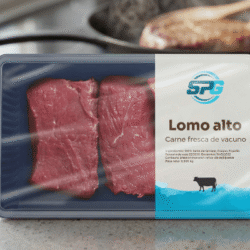
The shift towards recyclable and mono-material meat trays remains one of the strongest trends in 2025. Packaging made from recyclable PET, PP or paper-based structures allows brands to reduce their carbon footprint and comply with upcoming European regulations on circularity and waste reduction.
New rPET trays (made from recycled PET) are increasingly popular for case-ready meats. They maintain excellent sealing and barrier properties while minimizing the use of virgin plastic. In parallel, paper-based films and coatings are being introduced for products that require both visibility and sustainability.

Smart and Active Packaging for Meat Products
Another key development for 2025 is the growth of smart and active packaging technologies. These innovations use sensors, indicators or antimicrobial coatings to extend shelf life and improve food safety.
-
Active packaging integrates antimicrobial agents or oxygen scavengers that delay spoilage.
-
Smart packaging provides digital indicators of freshness or temperature exposure, helping both retailers and consumers monitor product quality.
These technologies not only reduce food waste but also strengthen brand trust, especially in premium or export-oriented meat products.
Modified Atmosphere Packaging (MAP) for Meat
Modified Atmosphere Packaging (MAP) continues to be one of the most reliable and sustainable solutions for preserving meat freshness. The process replaces oxygen with a mix of carbon dioxide and nitrogen, slowing down oxidation and bacterial growth.
MAP packaging enables producers to:
-
Extend shelf life without using additives
-
Maintain natural meat color and texture
-
Reduce food waste throughout the supply chain
By extending product durability and minimizing spoilage, MAP packaging contributes directly to sustainability goals and helps retailers optimize logistics and inventory management.
Sustainable Materials and Compostable Alternatives
2025 marks an important step towards compostable and bio-based meat packaging materials. Options such as PLA (polylactic acid), cellulose-based films, and biodegradable coatings are gaining traction, particularly for organic and premium meat brands.
However, the real challenge lies in balancing compostability, barrier performance and machinability — ensuring that sustainable options remain practical for high-speed industrial lines.
SPG’s R&D team continues to explore new combinations of bio-based resins and recyclable structures that meet food safety regulations while minimizing environmental impact.
Overview: Meat Packaging Solutions and Sustainability Benefits
| Packaging type | Sustainability benefit | Example use case |
|---|---|---|
| Recyclable PET trays | Easy to recycle, reduces virgin plastic usage | Case-ready meat |
| MAP meat packaging | Extends shelf life, reduces oxidation | Fresh beef cuts |
| Active packaging for meat | Incorporates freshness indicators, antimicrobials | Poultry products |
| Vacuum packed meat | Less plastic, longer shelf life | Minced beef, sausages |
| Compostable PLA trays | Biodegradable and eco friendly | Organic meat brands |
Future Outlook: Technology and Circular Economy in the Meat Sector
The coming years will bring a stronger integration between digitalization, traceability, and sustainable materials. AI-assisted quality control, QR codes for end-of-life guidance, and advanced monomaterial laminates are expected to shape the next generation of meat packaging.
At SPG, we are committed to driving this transformation through innovation, investment in recyclable structures, and close collaboration with our partners in the meat industry.
Frequently Asked Questions
What is MAP meat packaging and why is it sustainable?
Modified Atmosphere Packaging (MAP) for meat extends shelf life by replacing oxygen with protective gases. This reduces oxidation and food waste, improving sustainability across the meat supply chain.
What is the most eco friendly packaging for meat?
Recyclable PET trays, paper-based films, and compostable PLA materials are among the most sustainable options for meat packaging in 2025.
How does active packaging improve meat preservation?
Active packaging incorporates antimicrobial agents or freshness indicators that help extend product shelf life and ensure higher food safety standards.
Discover SPG’s Meat Packaging Solutions
Looking for sustainable packaging for your meat products?
Explore our full range of recyclable, MAP and active packaging solutions for the meat industry 👉 SPG Meat Packaging Solutions
Author
Written by María del Carmen Delgado Sustainability Specialist at SPG