


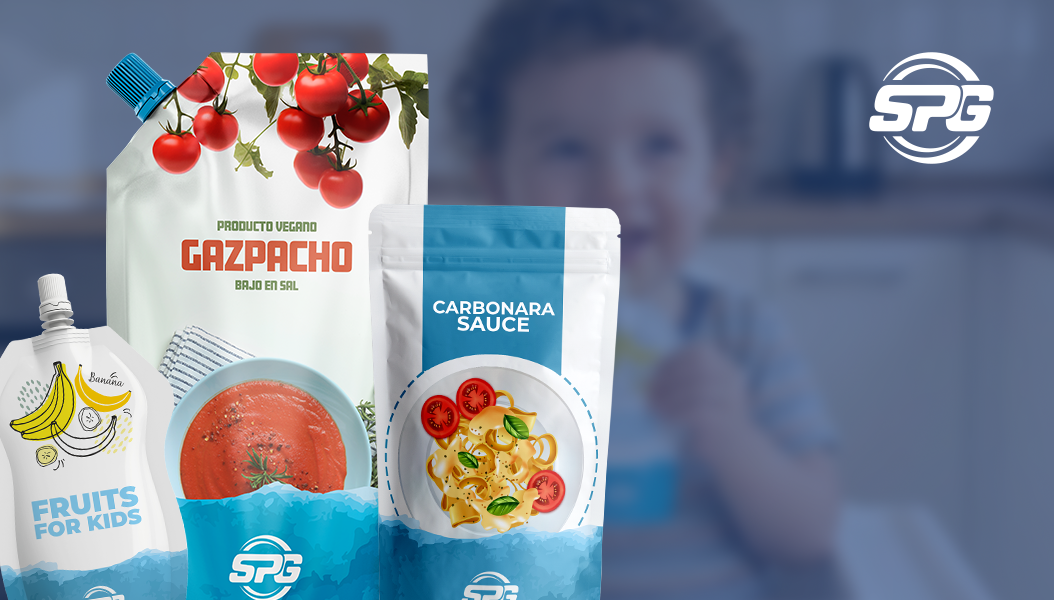
Protecting food goes far beyond preventing the packaging from breaking. Packaging plays an important role in preserving flavour, texture, aroma and nutritional quality throughout the product’s intended shelf life. Depending on the application, its barrier properties may also contribute to maintaining the required food-safety conditions. High-barrier packaging helps control the transmission of oxygen, moisture, light and gases, contributing to a longer product shelf life and reduced food waste.
However, there is no single packaging structure suitable for every application. Choosing the right solution requires an analysis of the product, the packaging process and recyclability objectives. Other factors must also be considered, including industrial efficiency, compatibility with packaging machinery and applicable regulatory requirements.
What is high-barrier packaging?
When we talk about high-barrier packaging, we are referring to the ability of a packaging structure to limit the transmission of oxygen, water vapour, aromas, light and other external agents that could affect food preservation.
Its purpose is to maintain food quality and safety throughout its shelf life, preventing changes such as oxidation, loss of aroma or microbiological deterioration when required by the application.
Barrier performance in food packaging does not depend solely on the raw materials used, but on the overall design of the package. The combination of materials, thicknesses and technologies must be tailored to the requirements of each food product in order to achieve the right balance between preservation, industrial efficiency, recyclability and compliance with European regulations.
For this reason, designing high-barrier packaging requires a comprehensive approach that considers both the characteristics of the food and the actual conditions throughout manufacturing, distribution and consumption.
Barrier properties required for food packaging
Barrier properties determine a package’s ability to protect food from external factors that may affect its preservation. However, not all products require the same level of protection. The structure must be designed according to the type of food, its shelf life, the packaging process and storage and distribution conditions. The aim is to incorporate only the level of barrier protection required to ensure product quality, optimising resources without compromising food preservation.
This approach makes it possible to develop more efficient solutions while avoiding materials or performance features that provide no real benefit for the specific application.
Oxygen permeability: why it matters
Oxygen permeability is one of the most important factors in food packaging, as oxygen accelerates oxidation and can affect the flavour, colour, aroma and nutritional value of many foods, as well as encouraging the growth of certain microorganisms. Reducing oxygen transmission helps extend shelf life and maintain product quality, although the required barrier level will always depend on the specific needs of each application.
A higher barrier than necessary does not always provide additional benefits and may increase the complexity of the packaging structure or make it more difficult to recycle.
Moisture barrier and protection against other external factors
Controlling water vapour transmission is essential for maintaining the texture and stability of many food products. While some products need to be protected against moisture entering the package, others require protection against moisture loss. Packaging can also act as a barrier against odours, volatile compounds and external contaminants, helping preserve the characteristics of the food throughout the distribution process.
Light barrier
Foods such as oils, dairy products and certain beverages can deteriorate when exposed to light for prolonged periods. Incorporating protection against light exposure helps reduce oxidation, preserve nutrients and maintain the product’s original colour and flavour.
In these cases, the required level of protection will depend on the sensitivity of the food and the expected storage and distribution period.
Barrier properties for modified atmosphere packaging
Foods packed using modified atmosphere packaging (MAP) require structures capable of controlling gas exchange to maintain a stable atmosphere inside the package. This is particularly important for fresh foods, meat products, cheeses, ready meals and ready-to-eat salads, where the barrier properties must be adapted to both the food product and the packaging process.
Proper barrier design is essential to maintain the stability of the gas mixture throughout the intended shelf life and ensure that the packaging performs as expected.
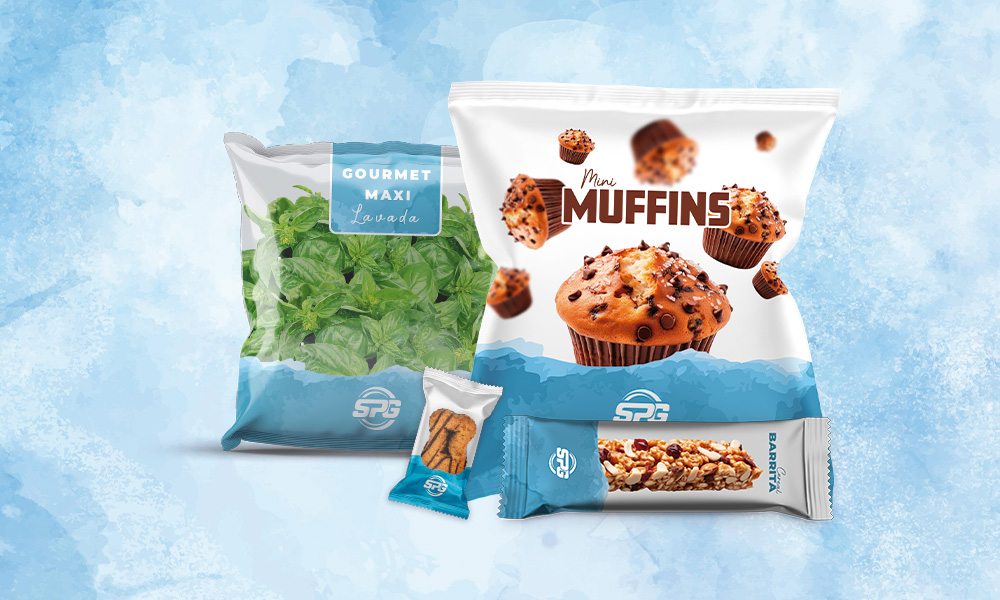
High-barrier packaging: most commonly used materials
High-barrier packaging can be developed by combining different materials and technologies according to the requirements of the food product, the desired shelf life and the packaging process. No single material can meet every preservation requirement on its own; each structure is designed to achieve the right balance between preservation, industrial efficiency, recyclability and resource optimisation.
EVOH: the benchmark material for oxygen barrier
EVOH stands out for its low oxygen permeability, making it a common choice for foods that are particularly sensitive to oxidation or for modified atmosphere packaging.
It is usually combined with other polymers that provide mechanical strength, sealability or moisture protection, allowing the structure to be tailored to each application.
PE, PP, PET and PA: complementary materials
These polymers provide specific properties such as mechanical strength, dimensional stability, sealability and moisture protection. Combining them makes it possible to adapt packaging performance to the requirements of each application.
How high-barrier film is designed
High-barrier film combines different layers to protect the food and ensure consistent performance throughout the packaging process. Its design takes into account factors such as the type of product, required shelf life, packaging format and logistics conditions to deliver the appropriate level of performance.
How is barrier performance measured?
Barrier performance must be assessed using measurable parameters and under clearly defined test conditions. Two of the most relevant indicators are:
- OTR, or oxygen transmission rate, which indicates the amount of oxygen that passes through a packaging material over a specified period.
- WVTR, or water vapour transmission rate, which measures the amount of water vapour transmitted through the material.
Temperature, relative humidity, material thickness and pressure conditions can affect these results. For this reason, different structures should only be compared when they have been tested under equivalent conditions.
The required OTR and WVTR values must be established according to the product, expected shelf life, packing process and real storage and distribution conditions.
How high-barrier multilayer packaging works
High-barrier multilayer packaging works by combining different materials within a single structure, with each material performing a specific function. Together, the different layers provide a level of protection that a single material could not achieve on its own.
While some layers provide mechanical strength or facilitate sealing, others reduce the transmission of oxygen, moisture, aromas or light, helping to preserve the food for longer without compromising its properties.
This combination makes it possible to develop packaging tailored to the requirements of each application, balancing protection, industrial efficiency and functionality. At the same time, advances in flexible packaging are driving more highly optimised structures from an ecodesign perspective. The aim is to simplify structures and improve recyclability wherever technically feasible while preparing for the progressive requirements established by the PPWR.
The current challenge is to develop structures capable of maintaining these performance levels while reducing packaging complexity and improving recyclability whenever the application allows.
How to choose the right high-barrier solution for your product
There is no single structure suitable for every food product. Choosing the right high-barrier solution means assessing the project as a whole and finding the right balance between protection, functionality and sustainability.
Before defining the packaging structure, several factors should be considered:
- The food product’s sensitivity to oxygen, moisture or light.
- Required shelf life.
- Packaging system.
- Preservation process.
- Logistics and distribution conditions.
- Recyclability objectives.
- PPWR requirements.
- Compatibility with existing packaging machinery.
Designing packaging solely to increase barrier performance can lead to unnecessary use of resources. The real challenge is to incorporate only the level of protection the product needs to maintain its quality throughout its life cycle.
SP Group: expertise in high-barrier packaging for future-ready solutions
At SP Group, we develop high-barrier flexible packaging solutions tailored to the requirements of each application. Our team combines expertise in materials, multilayer structures, printing technologies and manufacturing processes to develop packaging that optimises product preservation without compromising industrial efficiency or recyclability objectives.
We work closely with manufacturers and brands from the earliest stages of each project to select the most suitable structure based on the product, packaging process, and the technical and regulatory requirements of each application.
Every product requires a specific combination of barrier performance, mechanical properties, sealability and compatibility with the customer’s packaging machinery.
Contact our team to discuss the technical requirements of your product and packaging process.