


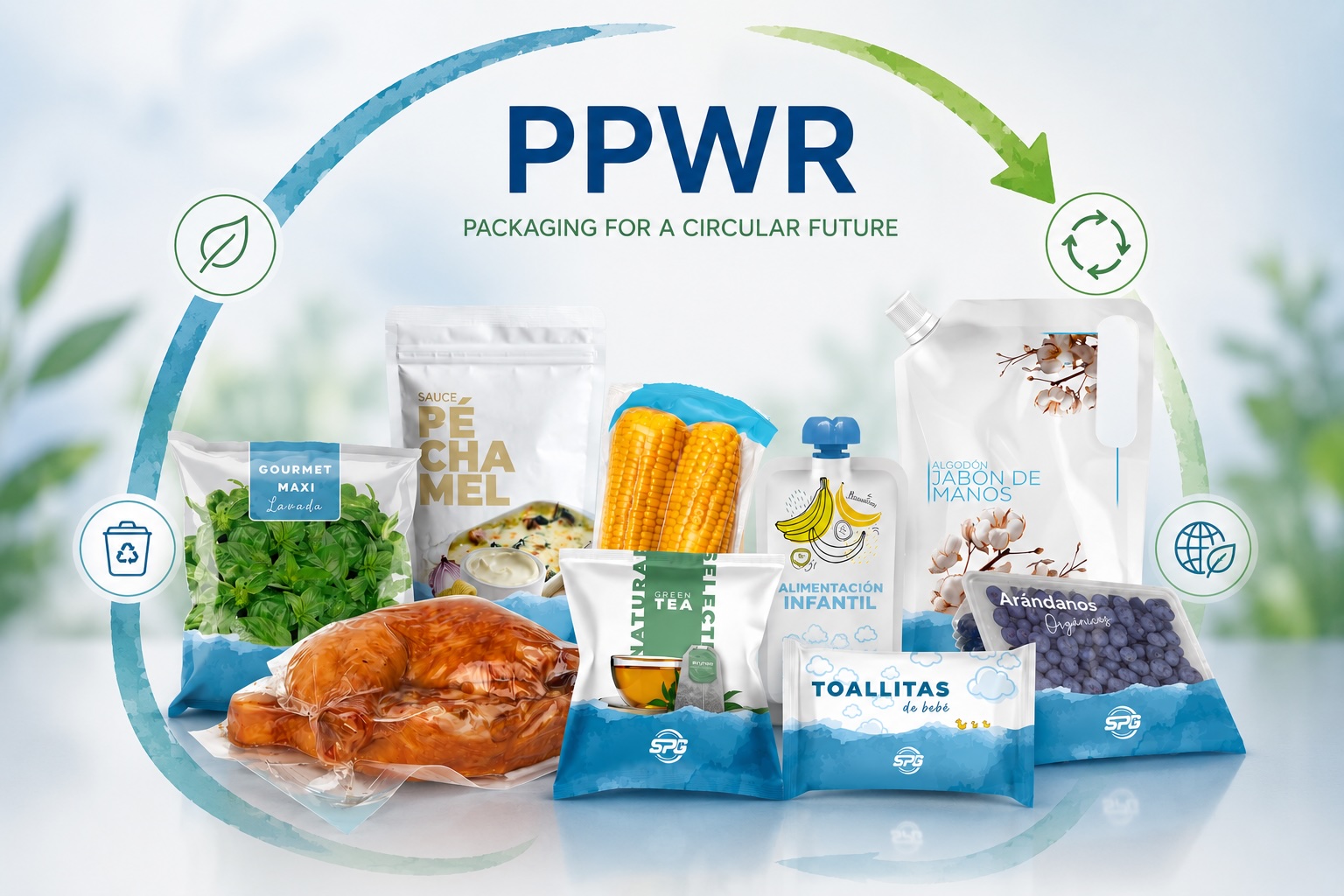
Over the past few years, the packaging industry has made significant progress in developing recyclable structures, reducing material usage and improving packaging design. However, creating a truly circular packaging system requires far more than innovation alone. Collection, sorting, recycling infrastructure and demand for recycled materials must all evolve together.
This is precisely the objective of the Packaging and Packaging Waste Regulation (PPWR), the new European framework that will bring significant changes for any company that manufactures, uses or places packaging on the market. Beyond sustainability, the regulation also affects packaging design, material selection, manufacturing processes and the way businesses will need to adapt over the coming years.
Understanding what the PPWR is, the obligations it introduces and how it may affect day-to-day operations will help companies anticipate regulatory changes, minimise compliance risks and prepare their packaging strategies for an increasingly demanding market.
What is the PPWR and why is it transforming packaging management?
PPWR stands for Packaging and Packaging Waste Regulation. It is the European Union’s new legislative framework designed to replace the previous directive and establish a single set of rules for all Member States.
The key difference from the previous system is that the PPWR is a regulation, meaning it will apply directly across the EU without requiring national transposition. This eliminates differing interpretations between countries and creates a harmonized framework for manufacturers, distributors, and brand owners.
For this reason, it is fundamentally changing the way packaging is managed. Companies will no longer focus solely on protecting products or reducing costs. They will also need to consider factors such as recyclability, reuse, technical documentation, material selection, and regulatory compliance from the earliest stages of packaging design.
What does PPWR mean? The objectives of the new European regulation
The PPWR has been introduced to transform the way packaging is designed, manufactured, and managed across the European market. Rather than simply introducing new legal obligations, the regulation aims to accelerate the transition towards a more circular economy while reducing the environmental impact of packaging waste.
The main objectives of the PPWR are to:
- Reduce packaging waste generation across all EU Member States.
- Improve the actual recyclability of packaging to facilitate end-of-life recycling.
- Promote reusable packaging and refill systems for specific applications.
- Reduce the use of virgin raw materials by increasing recycled content.
- Support a more circular economy by lowering the environmental impact of packaging.
- Harmonize regulatory requirements across Europe, making it easier for businesses to place products on the EU market.
In practice, the PPWR establishes a much more demanding regulatory framework in which recyclability, packaging design, material selection, and sustainability become integral parts of a single business strategy.
Key changes introduced by the PPWR
The new regulation introduces a range of changes that directly affect the design, manufacture, and placing of packaging on the market. Below are some of the key requirements that businesses will need to address.
New sustainability and recyclability requirements
Under the PPWR, packaging placed on the market will need to meet harmonized recyclability criteria. The regulation encourages simpler packaging designs, materials that are compatible with existing recycling systems, and design principles that facilitate efficient sorting and recycling at the end of the packaging’s life.
Packaging waste reduction and reuse
The PPWR establishes progressive targets for reducing packaging waste while introducing stricter requirements for reusable packaging, refill systems, and eliminating unnecessary packaging wherever possible.
New labeling and information requirements
The regulation introduces new obligations regarding consumer information, material identification, and labeling systems that help ensure packaging waste is correctly sorted and managed after use.
Packaging design for a circular economy
Recyclability, material reduction, and circularity will become essential design principles from the earliest stages of packaging development, rather than considerations addressed only at the end of the process.

How does the PPWR affect manufacturers, distributors, and businesses?
The PPWR affects virtually every company that manufactures, uses, distributes, or places packaging on the European market. Although the impact will vary depending on the type of business, most organizations will need to review their materials, processes, and technical documentation.
In general, the main implications include:
- Manufacturers: will need to review packaging materials, structures, thicknesses, and overall design to ensure compliance with the new requirements.
- Distributors: will be responsible for maintaining traceability, up-to-date technical documentation, and regulatory compliance throughout the supply chain.
- Brand owners and packaging users: will need to verify that the packaging they use complies with the new requirements relating to recyclability, material composition, and labeling.
Industries such as food, pharmaceuticals, cosmetics, and manufacturing face additional challenges, as they must adapt their packaging without compromising product protection, preservation, or safety. In the food industry, for example, this may involve reviewing barrier structures, mono-material packaging solutions, film thicknesses, printing inks, and recyclable packaging designs that maintain shelf life, food safety, and overall packaging performance.
PPWR packaging management: what businesses need to prepare for
Complying with the PPWR will require technical, organizational, and documentation-related changes across the business.
Key priority areas include:
- Assessing the actual recyclability of existing packaging.
- Reviewing complex multi-layer packaging structures.
- Evaluating future recycled content requirements.
- Updating technical documentation and traceability systems.
- Reviewing suppliers, materials, and packaging specifications.
During this process, many companies discover that packaging previously considered sustainable may not fully comply with the upcoming regulatory requirements.
When does the PPWR come into effect? Timeline
The PPWR officially entered into force in February 2025. However, its general application begins on 12 August 2026, with certain specific requirements being introduced progressively over the following years.
For this reason, waiting until the compliance deadlines approach may result in operational challenges, additional costs, and technical difficulties when adapting manufacturing processes.

How to prepare for the PPWR without disrupting operations
Preparing for the PPWR involves far more than simply replacing materials or redesigning packaging. For many businesses, it means validating new packaging solutions while ensuring that any changes continue to deliver the required product quality, shelf life, and packaging line performance.
The impact of these changes also extends well beyond the packaging itself. Compliance may require new product approvals, adjustments to production lines, technical validation, logistics modifications, or the evaluation of new materials and suppliers. For this reason, every project should be assessed holistically to identify potential implications before any changes are implemented.
Taking a proactive approach helps reduce uncertainty, allows sufficient time for testing and validation, and enables businesses to make well-informed technical and operational decisions.
To begin preparing, companies should focus on several key actions:
- Identify packaging formats that present the highest regulatory risk, particularly those with complex structures or poor recyclability.
- Evaluate alternative packaging solutions before compliance deadlines, reducing the risk of rushed changes or supply chain disruption.
- Validate new materials and packaging formats to ensure they continue to provide the required protection, preservation, barrier performance, and technical functionality.
- Assess the operational impact of packaging changes, as modifications may affect machinery, logistics, storage, or production efficiency.
- Prioritize future-ready solutions, including recyclable packaging structures, mono-material designs, downgauged packaging, and optimized packaging formats.
How SP Group can help you adapt your packaging to the PPWR
Adapting to the PPWR is about much more than simply achieving regulatory compliance. It also involves redesigning packaging, validating new materials, and optimizing production processes to ensure that any changes preserve product protection, functionality, and manufacturing efficiency.
At SP Group, we work with customers to develop flexible packaging solutions that combine circularity with the technical performance required by modern production lines.
Because sustainable packaging should not require compromising product protection, barrier performance or manufacturing efficiency.
Our expertise in flexible packaging and high-barrier materials enables us to achieve the right balance between sustainability, technical performance, and product protection.
We also develop packaging solutions that support the transition to a circular economy, helping businesses improve the recyclability of their packaging without compromising production efficiency.
Companies that begin this transition early will have greater flexibility to optimize costs, plan future investments, and avoid rushed modifications as new legal requirements come into force.
If your business needs to prepare its packaging for the PPWR, contact SP Group to receive expert technical guidance and identify the most suitable solution for your packaging requirements.
Frequently asked questions about the PPWR
Does the PPWR only apply to plastic packaging?
No. Although much of the discussion focuses on plastics, the PPWR applies to all types of packaging, regardless of the material used. This includes paper, cardboard, metal, glass, flexible packaging, multi-layer structures, and other packaging formats used across different industries.
Do small businesses also need to comply?
Yes. The regulation applies to any company that manufactures, uses, distributes, or places packaging on the European market. While certain obligations may vary depending on the company’s activities or size, compliance is not limited to large organizations.
Will the PPWR ban certain packaging formats?
Yes. The regulation introduces restrictions on specific packaging formats considered unnecessary or environmentally harmful, particularly certain single-use packaging applications. In addition, many existing packaging formats will need to be redesigned to comply with new requirements relating to recyclability, reusability, or material composition.
Is it worth starting now?
Absolutely. Preparing for the PPWR takes time, as it involves reviewing packaging materials, evaluating alternative solutions, carrying out technical validation, and coordinating multiple departments. Companies that begin the process early will be better positioned to minimize risk, optimize investment, and avoid last-minute compliance challenges.
How can I tell whether my packaging complies with the PPWR?
Assessing compliance with the PPWR requires evaluating several factors, including recyclability, material selection, packaging design, and labeling requirements. In many cases, it may also be necessary to review packaging structures and manufacturing processes.
At SP Group, we help businesses assess their existing packaging and develop compliant packaging solutions that meet the new regulatory requirements while maintaining technical performance and product protection.