


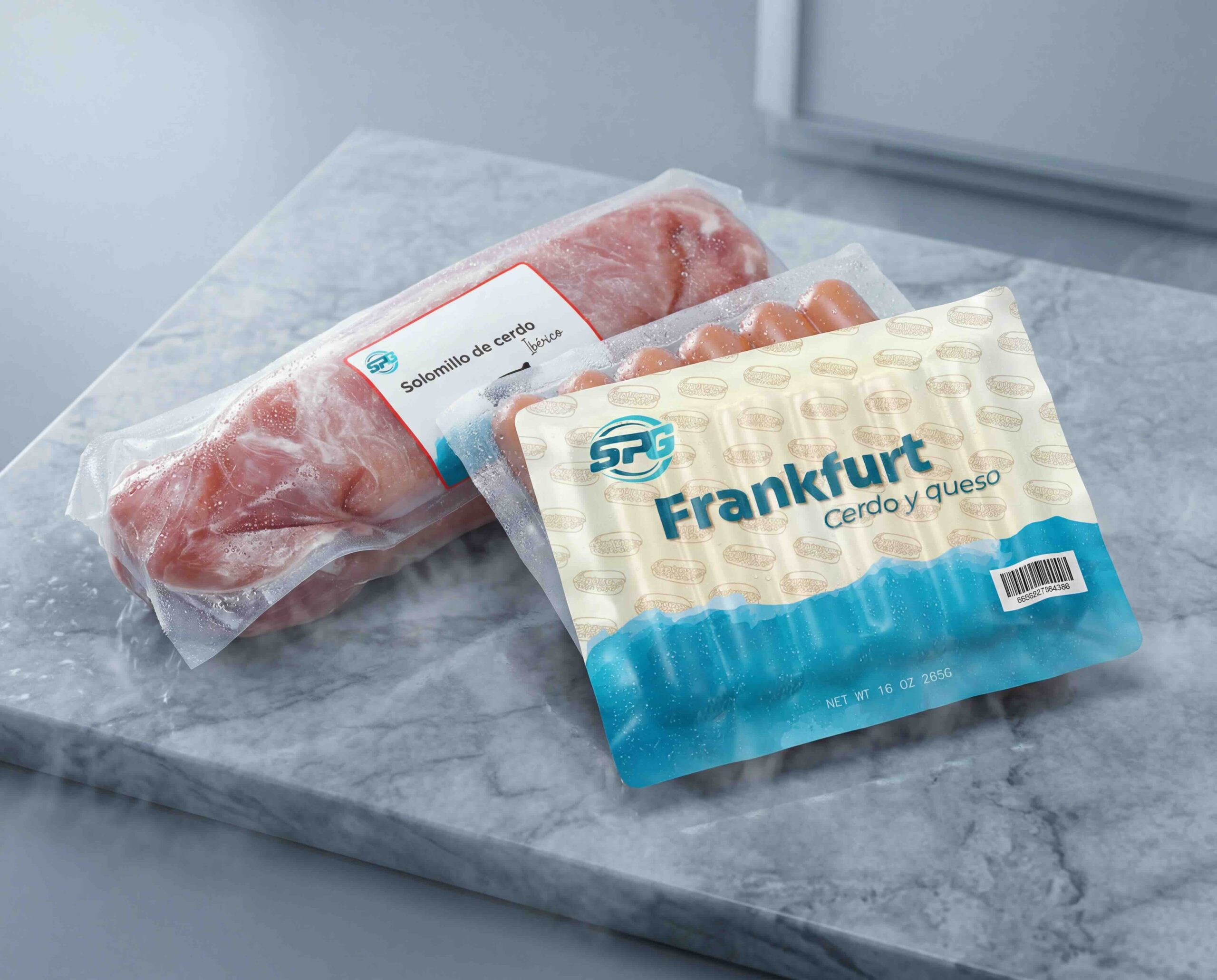
Choosing the right packaging system is a key decision for meat processors. Vacuum, skin and modified atmosphere packaging (MAP) offer different advantages in terms of product preservation, production efficiency and retail presentation.
But which solution is best suited to each application? The answer depends on the type of meat, the required shelf life, the packaging equipment and the materials used.
In this article, we compare the three systems and explore the technical factors that should guide the selection of the most suitable packaging solution.
Below, we compare the three systems and explain what to consider when choosing the most suitable option.
What’s at stake for meat processors when choosing packaging?
Packaging failure can affect production, food safety and the sale of meat products. Before choosing a packaging system, it is therefore important to assess the main risks:
- Product losses: if the packaging loses its seal integrity, the meat may deteriorate earlier than expected.
- Production downtime: problems during thermoforming or sealing may require stopping the production line.
- Food safety: packaging failure can compromise meat preservation and, in certain cases, lead to product recalls.
- Retail presentation: unattractive packaging or packaging that does not display the product clearly can make it harder to sell.
These factors must be considered alongside the need to select materials that meet the mechanical strength, barrier and sealing requirements of each application. An unsuitable structure can cause problems during packaging or affect product performance throughout distribution.
In addition, the meat industry must adapt to the European Packaging and Packaging Waste Regulation (PPWR), which introduces new requirements relating to recyclability and waste reduction.
The key is to strike the right balance between food safety, industrial performance and responsible resource use, without using more material than necessary.
How to vacuum pack meat using thermoformable bottom films
Vacuum meat packaging involves removing air from the pack before sealing it. Reducing oxygen helps limit aerobic microbial growth and oxidation, but it does not eliminate all microbiological risks. Refrigeration therefore remains essential.
This system is commonly used for whole cuts of fresh meat intended for storage and distribution. It can also be used for certain meat cuts and processed meat products, provided the food characteristics and storage conditions are suitable.
On thermoforming lines, the bottom film forms to accommodate the product and is then sealed with a top film.
For this application, SP Group offers RFA, a coextruded semi-rigid film, which provides:
- Barrier properties against oxygen and water vapour.
- Liquid-tightness to prevent leaks.
- Mechanical strength during handling and transport.
- Thermoformability to accommodate different meat cuts.
When selecting a thermoformable bottom film, consider the meat cut dimensions, forming depth, and machine operating conditions.
It is also important to assess material thickness, forming performance and seal quality, as these factors affect both line efficiency and the integrity of the finished pack.
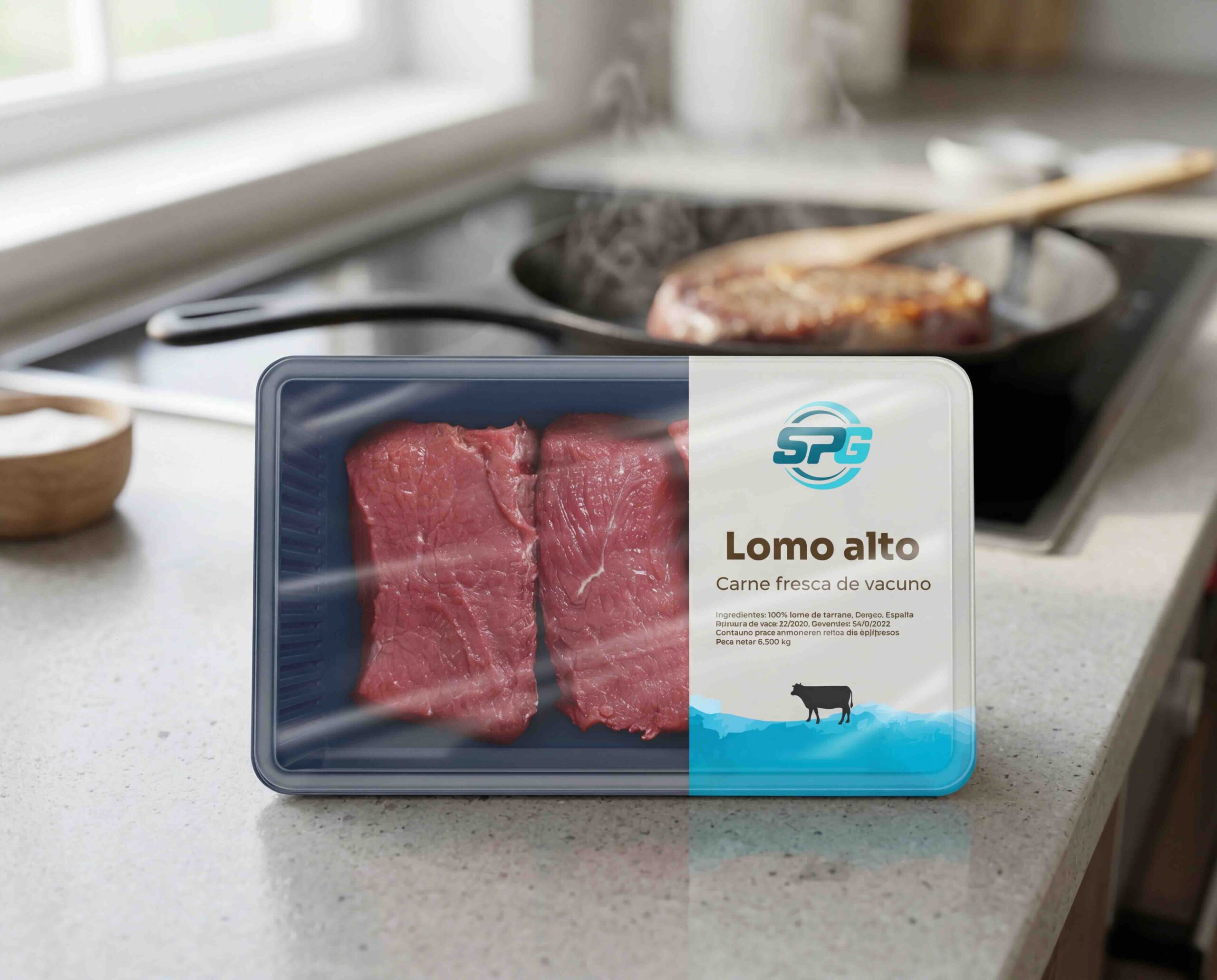
Tray and lidding film for modified atmosphere packaging: how to reduce environmental impact
Modified atmosphere packaging (MAP) replaces the air inside the pack with a controlled gas mixture to preserve certain characteristics of the meat.
For fresh beef, for example, some gas mixtures help maintain its red colour during retail display.
The composition of the modified atmosphere varies depending on the type of meat and the preservation objectives. Gases such as oxygen, carbon dioxide and nitrogen can be used in different proportions to control certain deterioration processes and preserve product characteristics.
The gas mixture must therefore be selected based on the food’s properties, intended shelf life, and storage conditions.
This system requires a tray and lidding film that can maintain the atmosphere inside the pack. SP Group’s meat packaging solutions include:
- SOL EFFICIENT: a lidding film that enables the development of structures tailored to specific preservation and sealing requirements.
- RPET RESILIENT: a thermoformable bottom film containing recycled material, designed to provide mechanical strength and reliable performance during packaging.
Depending on the application, SP Group offers different lidding and bottom film solutions that can be assessed to optimise material use, sealing performance and product protection.
From an ecodesign perspective, optimising material thickness and incorporating recycled content, where technically feasible and permitted by regulations, are two strategies worth considering to improve resource efficiency.
Skin packaging: when is it preferable to vacuum or MAP?
Skin packaging also uses vacuum technology but differs in how the top film conforms to the meat. The film follows the contours of the cut and seals to the base, creating a pack that fits closely around the product.
This format is particularly suitable for fresh meat cuts where presentation and stability during transport are important.
Its main advantages include:
- Attractive presentation: it clearly displays the shape and colour of the meat, particularly for premium cuts.
- Greater stability: it keeps the meat in position during transport and retail display.
- Reduced liquid movement: the close-fitting film can help contain meat exudate and improve the product’s appearance.
Another advantage is that the product remains fixed to the base, which can make it easier to display the pack in different positions at the point of sale, provided the packaging design allows it.
Its main limitation is that it requires specific films and compatible equipment, so you should check technical feasibility before introducing it into production.
Vacuum, skin or MAP: which packaging should you choose for your product?
Each packaging system meets specific requirements. The following comparison helps identify the most suitable format, depending on the meat product, its presentation, and the equipment required.
There is no universally superior system. Vacuum packaging may suit meat intended for distribution; skin packaging offers specific advantages for cuts where presentation is a priority; and MAP can be particularly useful for products requiring a controlled atmosphere.
In every case, the choice must be based on the product’s actual requirements and the production conditions.
The barrier properties of packaging also influence meat preservation. The selected solution should therefore be validated through shelf-life testing, seal integrity tests and assessments of its performance on the production line.
How SP Group approaches a meat packaging project
SP Group supports meat manufacturers in developing customised flexible packaging, from selecting the structure to adapting it to the industrial process.
Choosing between vacuum, skin and MAP is only the first step. The real challenge is to develop a structure that meets the product’s preservation requirements and performs reliably under actual production conditions.
To achieve this, SP Group combines its expertise in coextrusion, lamination and printing with the development of materials adapted to different packaging processes.
- Machinability: compatibility with thermoforming and sealing equipment.
- Protection: barrier properties, mechanical strength and required shelf life.
- Ecodesign: thickness optimisation, use of recycled raw materials where feasible, and recyclability.
- Presentation: customisation through gravure, flexographic or digital printing.
- Regulatory compliance: meeting food-contact requirements and adapting to the PPWR.
This approach lets us assess each project comprehensively, considering the material’s properties, its performance during packaging, and the finished product’s requirements.
Our five manufacturing facilities in Europe allow us to combine production capacity, different printing technologies, and technical development to meet each project’s needs.
Looking for the right packaging solution for your meat products?
At SP Group, we help meat processors select and develop packaging structures tailored to their preservation requirements, production equipment and sustainability objectives.
Contact our team to discuss your next packaging project.
Frequently asked questions about meat packaging
Can I switch to recyclable packaging without replacing my thermoforming machine?
In some cases, yes. It depends on the machine’s specifications, forming depth and sealing conditions. Before replacing a conventional structure, check compatibility through industrial trials and assess the recyclability of the complete pack.
What determines the shelf life of packaged meat?
It depends on the initial microbiological quality, storage temperature, oxygen presence, and the barrier properties of the packaging. Handling and distribution conditions also play a role. Shelf life must therefore be established through studies specific to each product.
What is the difference between recyclable packaging and packaging containing recycled plastic?
Recyclable packaging is designed to enter a suitable recycling process. Packaging containing recycled plastic, on the other hand, incorporates raw materials recovered from previous waste. These characteristics can coexist in the same packaging structure.