


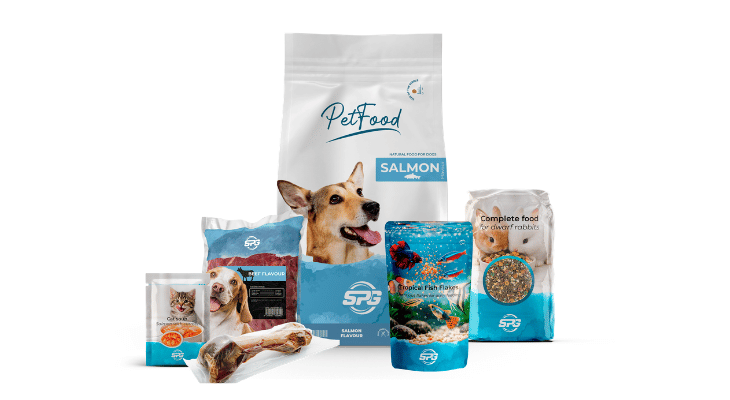
The pet food market continues to grow, driven by new consumer trends such as demand for higher-quality pet food, greater convenience, and a shift towards more sustainable packaging. In this context, pet food packaging plays a key role not only in product preservation but also in the consumer experience, logistics efficiency, and brand differentiation.
What is pet food packaging, and why is it important?
Pet food packaging is designed to protect the product from factors such as oxygen, moisture, light, and contamination. Its purpose is to preserve freshness, aroma, and nutritional properties throughout the product’s shelf life.
When packaging dry pet food, the material’s quality is essential to prevent oxidation, texture loss, and premature deterioration. This is why multilayer structures and high-barrier solutions are commonly used.
In addition to protecting the contents, pet food packaging must withstand transport and storage, be easy to use, and help the brand stand out at the point of sale through functional and attractive designs.
Types of packaging for pet food
The pet food sector uses different formats depending on the type of food, weight, and preservation requirements. Pet food sacks remain one of the most common options for large-format dry food.
Flexible sacks and bags
Pet food sacks made from flexible materials offer good mechanical resistance and can include zipper or Velcro closures to better preserve the product after opening. They also make transport easier and enhance convenience for end users.
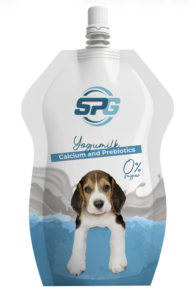
Stand-up pouches for pet food are another widely used option for medium and small formats. This type of packaging offers good visibility at the point of sale and can include easy-open solutions, handles, or tear notches.
Thermoformed and vacuum packaging
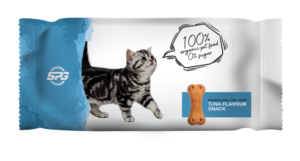
For wet pet food or functional snacks, thermoformed trays, vacuum bags, and formats suitable for protective atmosphere packaging are often used. These solutions help extend shelf life and better preserve the food’s sensory properties.
Materials and sustainable options for dry pet food packaging
Sustainability has become a major challenge in pet food packaging. The industry is looking for recyclable structures that maintain the properties needed to protect the food.
One of the main challenges in the sector is developing recyclable packaging that still provides the barrier protection needed for foods that are especially sensitive to moisture, oxygen, and fats.
Among the most widely used solutions are monomaterials based on recyclable polyethylene. Some developments make it possible to replace complex structures that are difficult to recycle with alternatives compatible with current waste recovery processes.
Recyclable packaging for pet food also reduces weight compared to rigid formats, helping to lower emissions associated with transport and storage. In addition, some recyclable materials incorporate recycled content while maintaining good transparency and resistance properties.
The importance of eco-design
Eco-design is not only about recyclability. It also aims to optimise thickness, reduce raw material consumption, and improve production process efficiency without compromising food protection. It also enables the development of lighter, more functional packaging that maintains the necessary barrier properties while reducing the environmental impact of packaging and transport.
Why barrier solutions and MAP are essential in pet food
High-barrier packaging for pet food and MAP solutions help preserve food more effectively and protect it from external factors that may affect its quality and stability. Some of their main advantages include:
Protection against oxygen and moisture
These packaging solutions are designed to limit the passage of oxygen, water vapor, and external aromas. This barrier is especially important for foods that are sensitive to oxidation or loss of freshness.
Longer product preservation
MAP technology uses modified atmosphere packaging to replace the air inside the pack with controlled gas mixtures. As a result, MAP packaging for pet food helps extend the product’s shelf life and preserve its organoleptic and nutritional properties.
Adaptation to industrial processes
Many barrier materials offer additional properties, such as fast sealing, thermal resistance, leak-tightness, and compatibility with hot filling and pasteurization, making them easier to integrate into various production processes.
How to choose the best packaging for pet food
Choosing packaging for pet food requires analyzing different technical, logistical, and commercial factors to ensure product preservation and functionality:
- Type of food: dry, wet, snacks, or functional products.
- Weight and packaging format according to the distribution channel.
- Expected shelf life and preservation requirements.
- Resistance to puncture, moisture, and handling during transport and storage.
- Opening systems, reclosure options, and ease of use for pet owners.
- Print quality and design for premium products to strengthen brand image.
In a highly competitive market, packaging is also a powerful way to stand out, especially in premium, natural, or functional product ranges, where design and print quality directly impact how consumers perceive the product.
Adaptation to production lines
Pet food packaging must also be properly adapted for vertical, horizontal, or pre-made pouch filling machines. The right compatibility helps prevent production issues and improve industrial efficiency.
SP Group, pet food packaging solutions
Choosing the right pet food packaging depends on the product type, required shelf life, packaging process, distribution needs, and sustainability goals. High-barrier materials, recyclable structures, and practical features such as resealable closures or easy-open systems help protect the food while improving convenience for the end user.
With its technical expertise, SP Group helps brands assess preservation needs, production requirements, and environmental objectives to find the right balance between protection, efficiency, recyclability, and brand presentation. The aim is to choose packaging that keeps products fresh, works well on production lines, and responds to current market expectations.
If you are looking for a tailored pet food packaging solution, contact SP Group to discuss your project and specific requirements.